
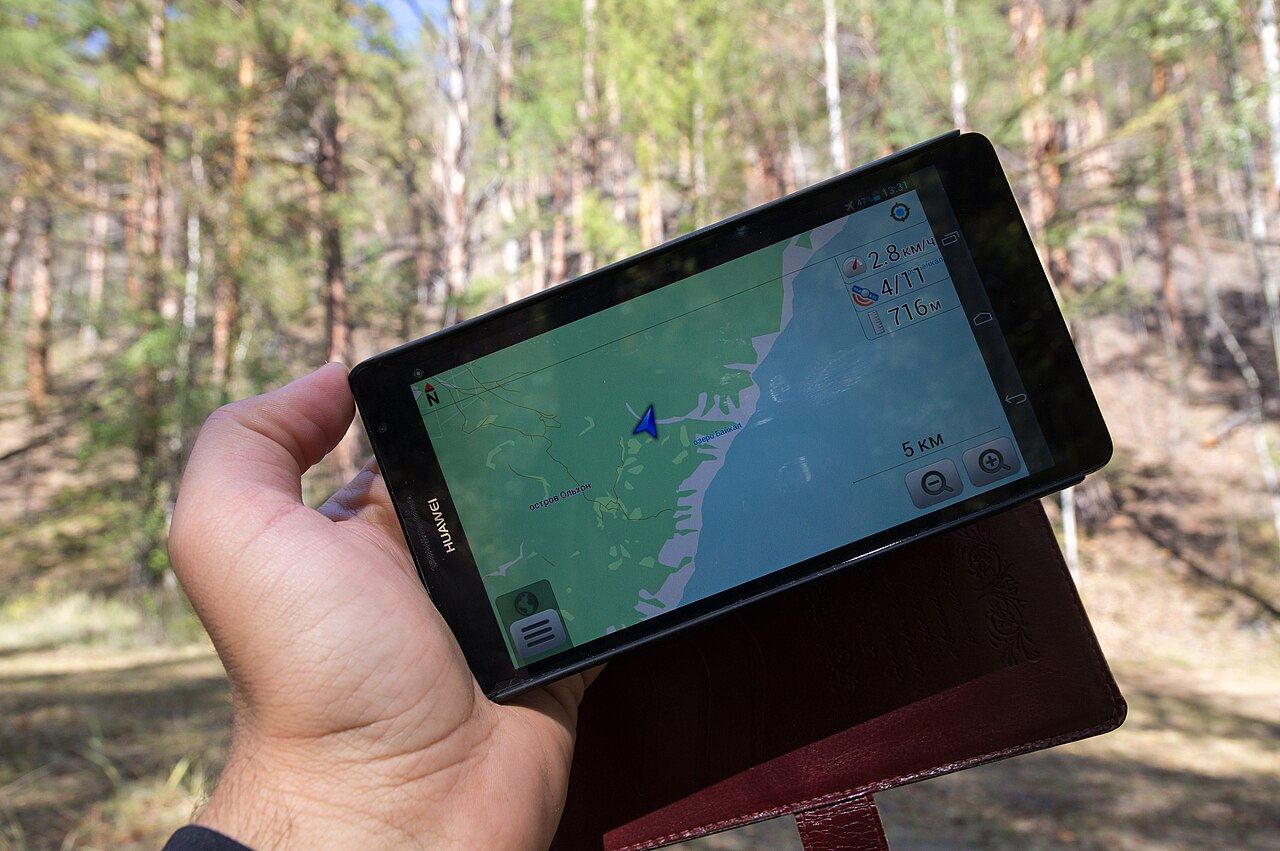

It is the first hot day in July. A homeowner’s AC blows warm air. She doesn’t ask her neighbor and she doesn’t open the phone book. She opens her phone, types “AC repair,” and taps the first map result with good stars.
You already know that is how a lot of jobs start now. The question is how many. If you are deciding whether to spend time on your Google profile, it helps to know if the number is “a few people” or “nearly everyone.”
Short answer
Google does not publish how many people use Google Maps to find local businesses. What it does say: Google Maps passed 2 billion users worldwide (October 2024), and in 2025 Google says it drove more than 2.5 billion calls, direction requests, messages, bookings and reviews a month for American businesses. In BrightLocal’s February 2026 survey of 1,002 US adults, Google was still the top place people used for local business reviews, at 71%.
direct connections a month to American businesses through Google in 2025, counting calls, direction requests, messages, bookings and reviews. Google doesn’t say which of its products they came through (Google, U.S. Economic Impact Report, 2025).
What Google itself says
We only used numbers Google published under its own name. There are three worth knowing, and each one measures something a little different.
1. Google Maps has more than 2 billion users
On Alphabet’s earnings call on 29 October 2024, CEO Sundar Pichai called Google Maps “the latest product to surpass the 2 billion user milestone.” That is a worldwide number, and it counts every use: driving directions, checking traffic, finding a taco stand. It does not say how many of those people look for a plumber.
2. Google drives billions of contacts with US businesses
This is the number closest to your phone ringing. In Google’s U.S. Economic Impact Report for 2025, the company says that every month in 2025 it helped drive more than 2.5 billion direct connections for American businesses. It counts phone calls, requests for directions, messages, bookings and reviews.
Two years earlier the number was lower. A Google Business Profile help page from August 2024 said Google drove over 2 billion monthly connections to US businesses in 2023.
Keep two limits in mind. This is Google’s own estimate of its own impact, so it is not neutral. And Google doesn’t say which of its products, Search or Maps, these contacts came through, so it doesn’t tell you how much comes from the map alone.
3. Most American businesses get contacts this way
The same report says more than 19.5 million American businesses, which Google calls a majority, used its free tools in 2025 to get calls, bookings, reviews, direction requests or other direct contacts from customers. If your competitors are on the map, that is why.
What customers say in surveys
BrightLocal, a local search company, runs a well-known yearly survey of US consumers. The 2026 edition came out on 11 February 2026 and asked 1,002 US adults how they look at local businesses.
- Google was still the top source for local reviews: 71%. That is down from 83% in 2025. BrightLocal reports this as Google overall, not Google Maps alone.
- Apple Maps nearly doubled: from 14% in 2025 to 27% in 2026.
- AI tools jumped: 45% said they used ChatGPT or similar tools for local recommendations, up from 6% the year before.
- Almost everyone reads reviews: 97% read reviews for local businesses, and the average person uses six different review sites.
The story here is not “Google is dying.” Google is still on top by a wide margin. The story is that customers now check more than one place. Your Google profile is the front door, and Apple Maps, Yelp and AI tools are side doors that more people walk through each year.
That is why it pays to have the same name, address and phone everywhere. If Apple Maps shows your old number, the customer who checked there calls a dead line. Our guide to NAP consistency shows how to fix that.
The famous stats we could not trace
Search “local SEO statistics” and you get pages of numbers. Many of them are old, and some have no real source. Here are two you will hear from SEO salespeople, and what we found.
“46% of all Google searches are local”
We traced this one back to a Search Engine Roundtable article from 17 October 2018. It reports that an unnamed Googler said it at a conference, based on one attendee’s tweet. The writer said he trusted the source but only had a tweet, and the number was questioned as too high from the start. Google never published a study behind it, and we found no update from Google since. We don’t use it.
“76% of people who search for something nearby visit a business within a day”
This one is credited to Google’s Think with Google site. When we tried to open Google’s page for it, it redirected to a general Google marketing page, and the number was gone. Blogs that repeat it date the study to the mid-2010s, which is a long time ago in phone years. We don’t use this one either.
A simple rule for any number someone shows you: ask who measured it, when, and whether you can open the original. If the answer is “everyone says it,” that is not a source.
What this means for a plumber, roofer or HVAC company
You don’t need an exact percentage to make a good decision. What the real numbers say is enough:
- The map is where calls start. Google counts billions of calls and direction requests a month. A lot of them are people like the woman with the warm AC.
- Your competitors are already there. Most US businesses use Google’s free tools to get contacts.
- Google is still first, but not alone. Apple Maps and AI tools are growing fast, so a listing that is right only on Google leaves gaps.
If you want to know how your own listing looks next to the businesses already on the map, our free audit compares your Google profile and reviews with the top businesses on the map for your trade and town.
The next step is knowing what decides who shows up. Start with local SEO for contractors: what actually moves the needle, then the hands-on steps in how to rank in Google Maps. And if your schedule is already full from word of mouth, read whether you need SEO if you get enough referrals.
Do this this week
- Search your main service and town on Google Maps, like “AC repair Gilbert.” Note where you show up, if at all.
- Do the same search on Apple Maps on an iPhone. Check that your name, phone and hours are right.
- In your Google Business Profile, open the Performance report. See how many calls and direction requests you got last month.
- Next time someone quotes you a stat, ask for the original source and the year.
Common questions
How many people use Google Maps?
Google said in October 2024 that Maps had passed 2 billion users worldwide. Google has not published a US-only user count for Maps.
What percentage of Google searches are local?
Google has not published a number. The widely shared “46%” comes from a 2018 conference remark reported through a tweet, with no study behind it.
Is Google Maps more popular than Apple Maps for finding businesses?
In BrightLocal’s 2026 survey of US adults, 71% used Google for local reviews and 27% used Apple Maps. Apple Maps nearly doubled from the year before, so it is worth claiming your listing there too.
Do people still use Google to find local businesses now that ChatGPT exists?
Yes. Google was still the top source in BrightLocal’s 2026 survey, even though AI tool use jumped to 45%. Most people now use both.
Want to see what customers see when they search for your trade in your town? Ask for our free audit. What we offer after that is on our packages page.
Sources
- Google, “Q3 earnings call: CEO’s remarks,” 29 October 2024. blog.google/inside-google/message-ceo/alphabet-earnings-q3-2024
- Google, U.S. Economic Impact Report 2025, read 12 November 2026. economicimpact.google
- Google Business Profile Help, “What’s new in Google Business Profile: August 2024,” read 12 November 2026. support.google.com/business/answer/15418417
- BrightLocal, “Local Consumer Review Survey 2026,” 11 February 2026, 1,002 US adults. brightlocal.com/research/local-consumer-review-survey
- Search Engine Roundtable, “Did Google Say 46% Of Searches Have Local Intent?,” Barry Schwartz, 17 October 2018. seroundtable.com/google-46-of-searches-have-local-intent-26529.html
- Think with Google, “Local search conversion statistics,” checked 12 November 2026: the page now redirects and the statistic is no longer shown.