
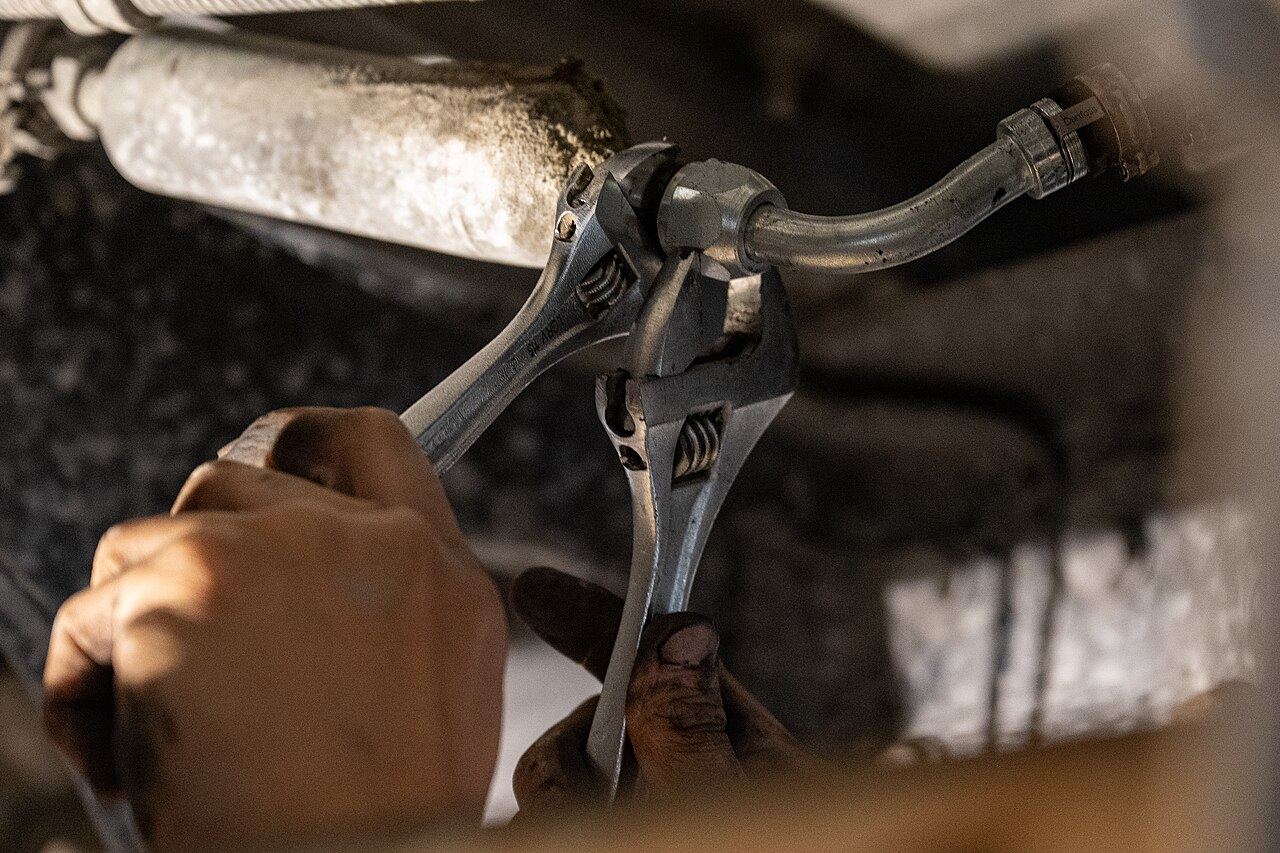

You’re under a sink with both hands full. Your phone buzzes in your back pocket. Then it buzzes again. By the time you crawl out and wipe your hands, there’s a missed call from a number you don’t know. No voicemail.
Was it a robocall? A guy selling extended warranties for your van? Or a homeowner with a dead water heater who has already called the next name on Google?
You’ll never know. That’s the problem with missed calls: they don’t send you a bill. The cost is real, but it’s invisible. So let’s make it visible.
Short answer
A missed call costs you the job that caller would have booked, and many callers don’t wait: in CallRail’s 2025 survey of 1,000 US consumers, only 42% said they leave a voicemail. There is no honest one-size dollar figure, so work out your own: missed calls per week × the share that would have booked × your average job value. Then cut the loss with faster answers, a text back, and follow-up.
of calls to home-service businesses were answered by a person, in Invoca’s July 2026 benchmark of its own customers’ calls. Leave out calls under 15 seconds (misdials and quick hang-ups) and it was 65% (Invoca Home Services Lead Conversion Benchmarks, 2026).
How many calls do home-service businesses miss?
The best recent number we could open comes from Invoca, a call-tracking company. Its July 2026 home-services report says a person answered 52% of calls across its home-service customers. For calls longer than 15 seconds, which filters out misdials, the answer rate was 65%. For calls over 30 seconds, 73%.
It varied a lot by trade. Invoca says answer rates across its home-service sub-industries ran from 32% to 74%.
Two things to keep in mind:
- These are averages across Invoca’s own customers. Companies that pay for call tracking tend to be bigger, with office staff. A one-truck shop could be better or worse.
- You’ll see other missed-call percentages quoted online. We couldn’t trace the popular ones to an original study, so we left them out.
Here’s the honest takeaway: even businesses that pay to track their calls miss a big share of them. If you’re the owner, the tech and the office, you are probably missing some too.
Why callers don’t wait for you to call back
In plumbing, HVAC and roofing, a lot of calls are about something going wrong right now. Water on the floor. No heat in January. A tarp flapping on the roof. That customer isn’t shopping. They’re trying to make the problem stop.
CallRail, another call-tracking company, surveyed 1,000 US consumers and published the results in September 2025. When a business doesn’t answer:
- 42% said they leave a voicemail.
- 21% said they immediately call another business.
- 78% said they have taken their business elsewhere after failing to reach a company by phone.
That’s what people say they do, not a recording of what they did. But it matches what you’d expect. The next plumber is one thumb-tap away on the same Google list.
And a voicemail isn’t the end of the risk. In a 2020 Pew Research Center survey of 10,211 US adults, about 8 in 10 said they generally don’t answer calls from unknown numbers on their cellphone. So when you call back from your cell, you may land in their voicemail. Now you’re playing phone tag with someone who has a flooded basement.
Do the math with your own numbers
Industry averages make nice headlines, but they don’t pay your bills. Your numbers do. Here’s a simple way to work out what missed calls cost you. It takes about five minutes.
The formula: missed calls per week × share that would have booked × average job value = money walking away each week.
Step 1: Count your missed calls
Open your phone’s recent calls, or your carrier’s online call log, and look at the last two weeks. Count the missed calls. Then cross off:
- Spam and robocalls (you can usually tell from the caller ID or a quick search).
- Repeat calls from the same number. Count each person once.
- People you called back and reached.
Divide what’s left by two. That’s your missed calls per week.
Step 2: Estimate how many would have booked
Look at last month’s calls that you did answer. Out of every 10 real callers, how many turned into a booked job? That’s your booking rate. Use the same rate for missed calls. If anything, that guess is low, since urgent callers are the ones least likely to wait.
If you have no idea, Invoca’s averages give a rough starting point. It found 38% of answered home-service calls were sales leads, and 45% of those leads booked on the call. Multiply them and you get about 17 bookings per 100 answered calls. (That’s our math from their numbers, and remember their 100 calls include existing customers and wrong numbers.)
Step 3: Find your average job value
Add up last month’s invoices. Divide by the number of jobs. Use the money you invoice, not your profit, unless you want the profit version. Both are useful.
A worked example (made-up numbers)
These numbers are an example only. They are not an industry average. Swap in your own.
- Real missed calls per week: 6
- Share that would have booked: 30% (3 out of 10)
- Average job value: $450
- Lost per week: 6 × 0.30 × $450 = $810
- Lost per year: $810 × 52 weeks = $42,120
In this example, missing six real calls a week costs about $42,000 a year in work that went to someone else. Your number could be much smaller or much bigger. That’s the point of doing it yourself.
What the formula leaves out
The math above is the floor, not the ceiling. A missed call can also cost you:
- The next ten years of that customer. The homeowner who calls about a leak today needs a water heater in five years and a repipe after that. Whoever answers first often keeps them.
- Referrals and reviews. A customer you never served can’t tell their neighbor about you or leave you a Google review.
- The big jobs. Emergency and after-hours calls tend to be the urgent ones. Those are also the calls most likely to come when you can’t pick up.
- The marketing you paid for. If a yard sign, a truck wrap or your Google profile made the phone ring, a missed call wastes that too.
Why the calls get missed in the first place
Most missed calls aren’t laziness. They’re the job. You’re on a roof. You’re driving. You’re in a customer’s attic with no signal. You’re at your kid’s game on Saturday. It’s 9pm and you’re finally eating dinner.
Look at your two-week call log again and note when the missed calls came in. Mid-morning on the first job? Lunch? After 5pm? Knowing your own pattern tells you which fix to try first.
Four ways to lose fewer missed-call jobs
1. Answer more of them
The best fix is a human voice. That might be a spouse, an office helper for the busy hours, or an answering service. When you do answer, ask for the booking. Invoca found that 55% of the home-service businesses in its data don’t ask leads to buy or book the job. Answering is step one. “Can I get you on the schedule for Thursday morning?” is step two.
2. Text them back in seconds
When you can’t answer, a short automatic text can catch the caller before they dial the next name. Something like: “Hi, this is Smith Plumbing. Sorry we missed your call. How can we help? Reply STOP to opt out.” It reaches the caller while they’re still deciding who to call next. We explain the setup, the wording and the rules in missed-call text-back: how it works and what to say.
One catch: business texts sent through software in the US must be registered with the carriers first, or they get blocked. Here’s A2P 10DLC in plain English, which covers what that means and how long it takes.
3. Fix your voicemail greeting
Your greeting should say your business name, that you’re probably on a job, and the fastest way to reach you. If you text back, say so: “Or just text this number and we’ll get right back to you.”
4. Follow up on every quote
A missed call is one leak. A quote you never follow up on is another. Plenty of quotes go quiet because the customer got busy, not because they said no. Two short, friendly check-ins usually settle it. Here’s how to follow up on a quote without being annoying, with example texts.
Want to know how many calls you could be getting in the first place? Our free audit is a written check of your Google profile, reviews and website, the places most of those calls start. It’s free and there’s no obligation.
Do this this week
- Pull your last two weeks of calls. Count the real missed calls (no spam, no repeats).
- Work out your booking rate and average job value from last month.
- Run the formula: missed calls per week × booking rate × average job value. Write the number down.
- Note when the missed calls happen. Pick one fix for that time slot.
- Rerecord your voicemail greeting with your business name and the fastest way to reach you.
- Look at every quote you sent in the last two weeks. Follow up on any that went quiet.
Frequently asked questions
How many calls do small businesses miss?
It depends on the business, and good public data on small, owner-run shops is thin. In Invoca’s July 2026 home-services benchmark, a person answered 52% of calls overall and 65% of calls longer than 15 seconds. The only number that really matters is your own, which your call log will show you.
Do people still leave voicemails?
Some do. In CallRail’s 2025 survey of 1,000 US consumers, 42% said they leave a voicemail when a business doesn’t answer. That means most callers don’t, so a missed call with no voicemail is often a real customer, not just spam.
Is it better to call back or text back?
Do both, text first. A text arrives in seconds, and a callback from an unknown number often goes unanswered: about 8 in 10 US adults said they generally don’t answer unknown cellphone calls in Pew’s 2020 survey. Then call when you’re free, if the caller hasn’t already replied.
How fast do I need to call back a missed call?
As fast as you can. In CallRail’s survey, 21% of people said they immediately call another business when one doesn’t answer. For an urgent job, the first business to respond often wins. A text back within seconds buys you time to finish what you’re doing.
Is an answering service worth it?
Run the formula in this post first. If missed calls cost you more than the service would, it’s worth trying. Some owners pair a service for busy hours with a text-back for everything else.
The bottom line
You won’t answer every call. Nobody does, not even the big outfits with a call center. But once you know what a missed call costs you, it’s much easier to decide what’s worth fixing.
If you’d like a second pair of eyes, start with our free audit. If you want us to set up the text-back and follow-up for you, you can see what we offer on our packages page.
Sources
- Invoca, “2026 Home Services Lead Conversion Benchmarks Report,” July 2026, averages across Invoca’s customer base. invoca.com/reports/the-invoca-home-services-lead-conversion-benchmarks-report-2026
- CallRail, “Why businesses can’t afford to miss calls,” 25 September 2025, survey of 1,000 US consumers. callrail.com/blog/missed-calls-cost-businesses-more-than-ever
- Pew Research Center, “Most Americans don’t answer cellphone calls from unknown numbers,” 14 December 2020, survey of 10,211 US adults, July 2020. pewresearch.org/short-reads/2020/12/14/most-americans-dont-answer-cellphone-calls-from-unknown-numbers